
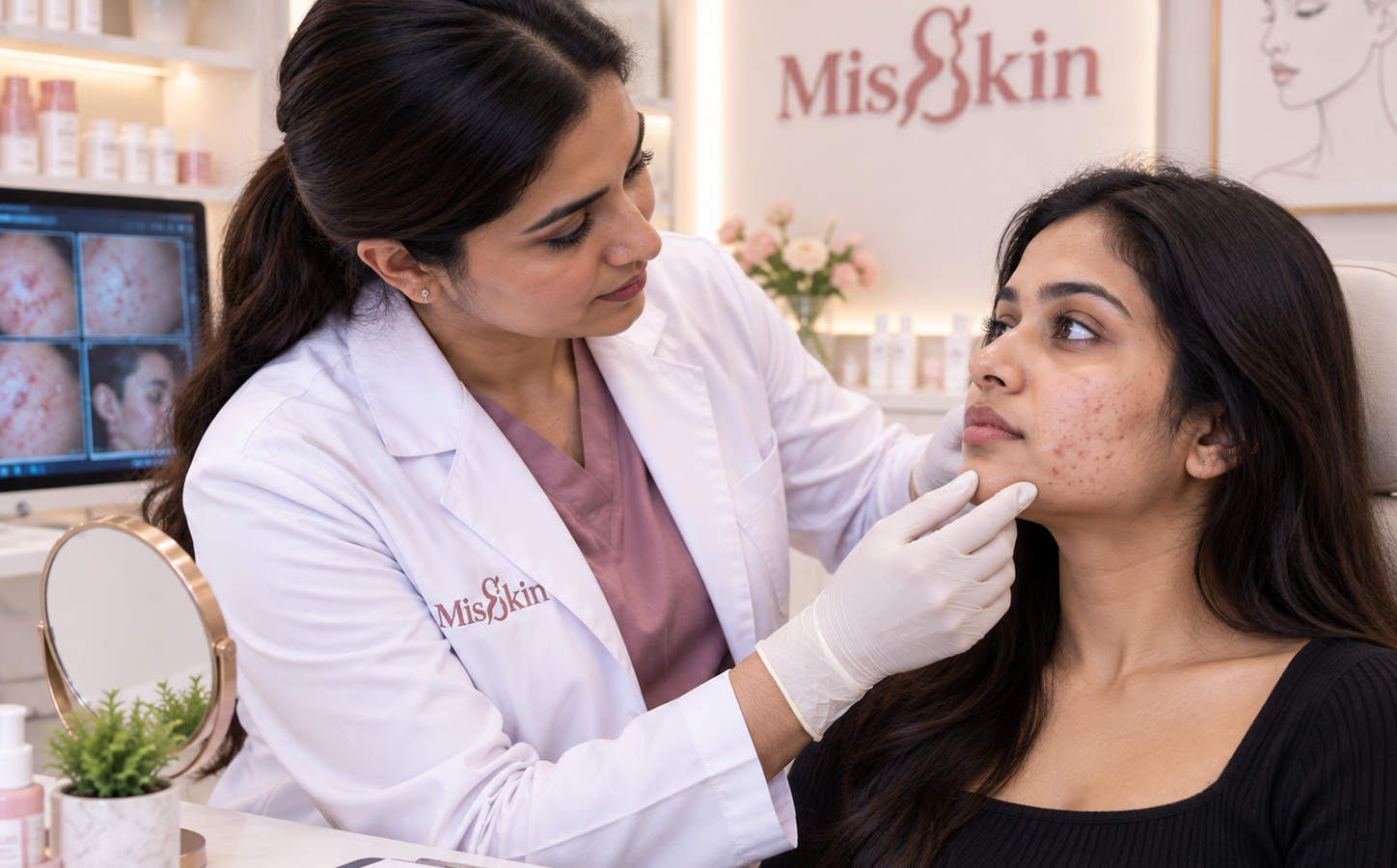
Why Does Acne Keep Coming Back? Causes and Treatment
Why Does Acne Keep Coming Back? Causes, Common Mistakes and Treatment Options
If you feel like your acne keeps coming back even after trying different face washes, creams or home remedies, you’re not alone. Recurring acne is often frustrating because a pimple disappears only for another one to appear a few days later.
The important thing is that recurring acne isn’t always caused by “dirty skin” or simply using the wrong face wash.
Hormones, oil production, clogged pores, inflammation, medications, skincare habits and the type of acne you have can all play a role.
When acne keeps coming back, the goal should be to understand the pattern rather than repeatedly treating individual pimples.
Why Does Acne Keep Coming Back?
Acne develops through a combination of factors including excess oil production, clogged follicles, bacteria and inflammation.
But the reason your acne continues may be different from someone else’s.
Common factors include:
- Hormonal fluctuations
- Excess oil production
- Clogged pores
- Inflammatory acne
- Stress
- Certain skincare or cosmetic products
- Picking or squeezing pimples
- Inconsistent treatment
- Stopping treatment too early
- Certain medications
- Underlying hormonal conditions in some people
If acne keeps coming back, looking at the overall pattern is usually more useful than changing products every few days.
Is Recurring Acne Always a Skincare Problem?
Not necessarily.
Sometimes the products you’re using may contribute to breakouts, but acne can also be influenced by factors that skincare alone cannot completely address.
For example, adult acne can sometimes be associated with hormonal changes.
Some women notice that breakouts appear repeatedly around particular stages of the menstrual cycle.
Others may notice acne around the:
- Jawline
- Chin
- Lower cheeks
- Neck
The pattern itself can provide useful information for a dermatologist.
At Misskin, acne assessment includes evaluation of skin type, acne grade and possible triggers before creating a personalised treatment plan.
Can Stress Make Acne Come Back?
Stress isn’t necessarily the only cause of acne, but it can be associated with worsening breakouts in some people.
When you’re under stress, several changes can occur in the body and daily routine.
You may:
- Sleep less
- Change your eating habits
- Touch your face more often
- Skip your skincare routine
- Use more cosmetic products
- Pick at existing pimples
If you’ve noticed that acne keeps coming back during particularly stressful periods, mention that pattern during your dermatology consultation.
It can be useful information when looking at the bigger picture.
Could Your Skincare Routine Be Making Acne Worse?
Sometimes the problem isn’t that you’re not using enough products.
It may be that you’re using too many.
A common routine might include:
- Face wash
- Scrub
- Toner
- Multiple serums
- Exfoliating acids
- Spot treatments
- Masks
- Moisturiser
- Sunscreen
Individually, some products may be useful. But combining too many active ingredients can irritate the skin.
When the skin barrier becomes irritated, you may experience redness, burning, dryness or increased sensitivity.
If your skin repeatedly breaks out after adding new products, don’t keep adding more products to fix the problem.
A dermatologist can help simplify the routine and identify what is actually necessary.
Should You Stop Treatment When the Acne Looks Better?
This is a common reason acne keeps coming back.
Someone sees improvement and assumes the acne is completely under control.
They stop their routine.
A few weeks later, new breakouts appear.
Acne management often requires consistency rather than treating each pimple as an isolated event.
The exact duration and treatment approach depend on the type and severity of acne, so your dermatologist should guide the plan.
The American Academy of Dermatology notes that acne treatment aims not only to clear existing acne but also to prevent new breakouts and reduce the risk of scarring.
Should You Pop Pimples?
It can be tempting, especially when a pimple is painful or visible.
But squeezing, picking or scratching acne can increase inflammation and raise the risk of scarring and discoloration.
If acne keeps coming back, repeatedly picking at the same areas can make the situation even more frustrating because you’re dealing with both active acne and marks left behind by previous breakouts.
What If the “Acne” Isn’t Actually Acne?
Not every bump on the face is acne.
Some conditions can look similar to acne, including certain forms of folliculitis and perioral dermatitis.
That’s why persistent or unusual breakouts shouldn’t always be treated with random acne products.
The American Academy of Dermatology specifically notes that some conditions can be mistaken for acne and may require a different treatment approach.
A dermatologist can examine the skin and determine whether you’re actually dealing with acne or another condition.
When Should You See a Dermatologist for Recurring Acne?
You don’t necessarily have to wait until acne becomes severe.
Consider a professional consultation if:
- Acne repeatedly returns despite consistent skincare
- You have painful or deep pimples
- Breakouts are leaving dark marks
- You are developing visible scars
- Acne is affecting your confidence
- Breakouts are concentrated around the jawline or chin
- Your skin is becoming irritated from multiple products
- You aren’t sure whether the bumps are actually acne
The AAD notes that people with deep, painful acne or acne that leaves scars should seek dermatological care rather than relying solely on over-the-counter products.
How Is Recurring Acne Treated?
There isn’t one treatment that works for every person.
Depending on the diagnosis, a dermatologist may consider a combination of:
Medical skincare
Prescription or dermatologist-recommended products may be used to control acne and prevent new breakouts.
Chemical peels
In appropriate cases, chemical peels can form part of an acne treatment plan.
Misskin offers dermatologist-led acne treatment in Bangalore with treatment plans based on acne type, skin characteristics and severity.
Acne extraction
For selected types of clogged lesions, professional extraction may be considered rather than repeatedly squeezing them at home.
Laser-based treatments
Certain acne cases may benefit from device-based treatment, depending on the individual assessment.
Treating acne scars separately
If your acne has already caused textural scars, the treatment plan may be different from the treatment used for active acne.
Misskin’s Acne Scar Treatment includes options such as MNRF, microneedling, subcision, lasers and peels depending on the scar type.
What If Acne Has Left Dark Marks?
Dark marks after acne aren’t necessarily the same thing as acne scars.
A flat brown or darker area left after a pimple may be post-inflammatory hyperpigmentation rather than a true depressed scar.
This distinction matters because treatment can be different.
If pigmentation is your main concern, Misskin also provides Pigmentation & Melasma Treatment using dermatologist-planned combinations of skincare, peels and other treatments where appropriate.
Why Sunscreen Still Matters When You Have Acne
Some people with acne avoid sunscreen because they worry it will make their skin oily.
But sun protection is particularly important when you’re dealing with post-acne marks.
Sun exposure can make pigmentation more noticeable and can complicate the process of improving uneven skin tone.
After acne-scar treatments, the American Academy of Dermatology recommends broad-spectrum sunscreen with SPF 30 or higher and following your dermatologist’s specific aftercare instructions.
Your dermatologist can recommend a sunscreen formulation appropriate for your skin type.
How Long Does Acne Treatment Take?
There isn’t a universal timeline.
Some people see improvement relatively quickly, while others need a longer treatment period.
It depends on:
- Type of acne
- Severity
- Hormonal factors
- Skin sensitivity
- Treatment consistency
- Whether acne scars or pigmentation are also present
- Whether the underlying trigger is still active
At Misskin, the current acne treatment page notes that meaningful improvement may take several weeks and that timelines vary according to acne grade and consistency of treatment.
So if acne keeps coming back, changing products every week may make it harder to understand what’s actually helping.
What Can You Do at Home?
A simple routine is often easier to maintain than a complicated one.
Depending on your dermatologist’s advice:
- Cleanse your skin gently.
- Avoid aggressive scrubbing.
- Don’t squeeze or pick pimples.
- Use products recommended for your skin type.
- Use sunscreen during the day.
- Give a treatment plan enough time to work.
- Avoid introducing several new active ingredients simultaneously.
- Seek professional advice if acne is persistent or scarring.
The goal isn’t to have the most complicated skincare routine.
It’s to have the right routine for your skin.
Frequently Asked Questions
Why does acne keep coming back?
Acne can recur because of hormonal changes, excess oil, clogged pores, inflammation, skincare factors, inconsistent treatment and other individual triggers. Finding the underlying pattern is important.
Why do I get pimples in the same area repeatedly?
Repeated breakouts in the same area can have several causes, including hormonal patterns, clogged follicles, irritation or habits such as touching the area. A dermatologist can assess the pattern.
Can stress cause recurring acne?
Stress can be associated with worsening acne in some people, although it isn’t necessarily the only cause.
Does popping pimples make acne worse?
Picking, squeezing or scratching pimples can increase inflammation and raise the risk of acne scars and pigmentation.
When should I see a dermatologist for acne?
Consider seeing a dermatologist when acne is persistent, painful, recurrent, scarring, leaving significant pigmentation or not improving with an appropriate skincare routine.
Can acne scars be treated after acne is controlled?
Yes. Once active acne is appropriately managed, a dermatologist can assess remaining scars and recommend treatment based on whether they are depressed, raised or primarily pigmentation.
Final Takeaway
If acne keeps coming back, the answer may not be another face wash or another spot cream.
Recurring acne deserves a closer look at the pattern, possible triggers and the type of acne you’re experiencing.
A dermatologist can help determine whether you’re dealing with hormonal acne, persistent inflammatory acne, clogged pores, irritation or another skin condition — and then build a treatment plan around that diagnosis.
Misskin
Dermatologist-led skin and aesthetic care in Bangalore
Locations: Sadashivanagar | RR Nagar | Jayanagar | HSR Layout | HRBR Layout
Call: 9538666485
Email: reachus@misskin.in
Book Your Consultation