
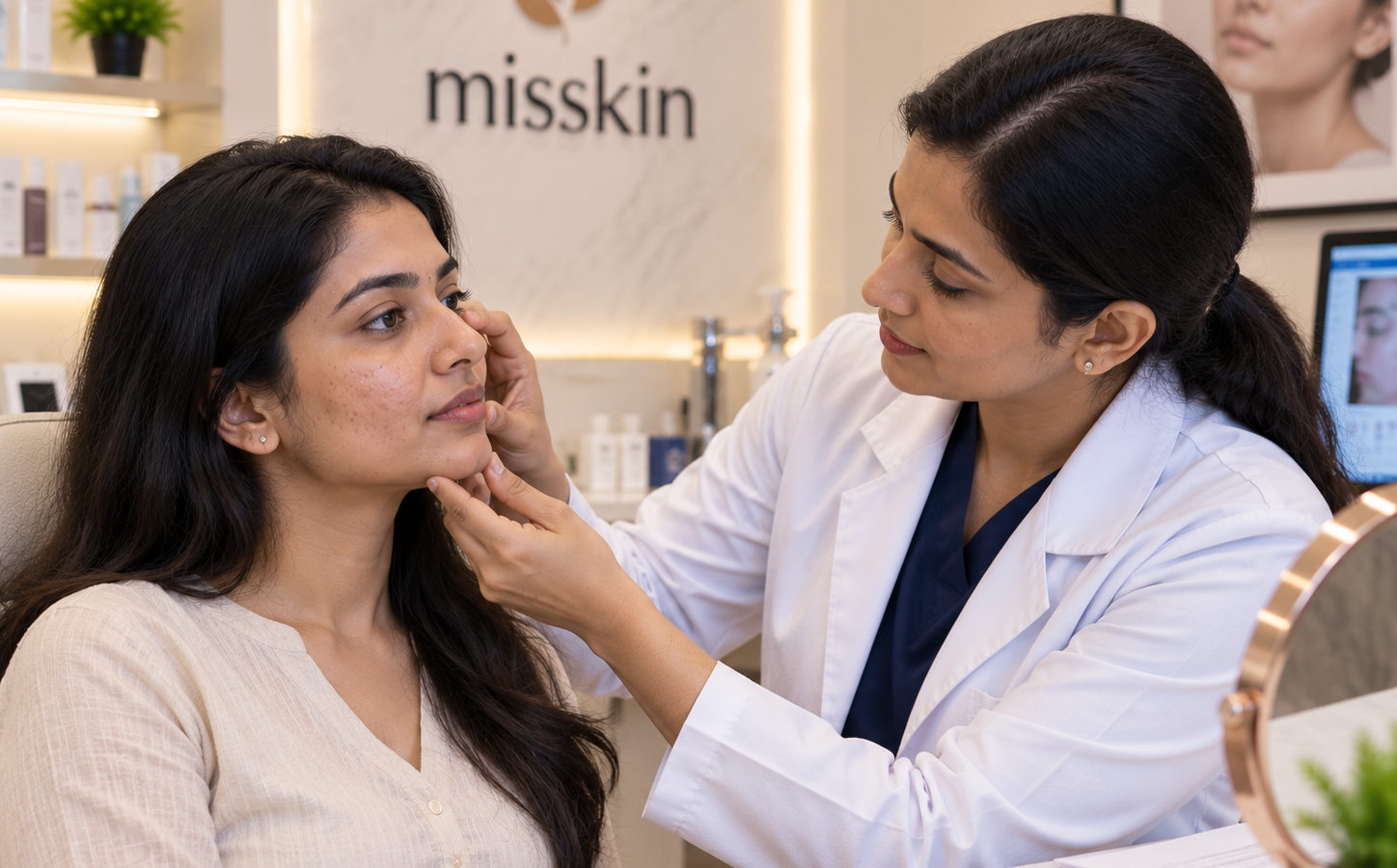
Chemical Peel vs Facial: Which Skin Treatment Is Different?
Chemical Peel vs Facial: Understanding the Difference
Facials and chemical peels are often grouped together because both are associated with improving the appearance and feel of the skin. However, they are not the same treatment.
A facial is generally focused on cleansing, exfoliation, hydration and improving the immediate appearance of the skin. A chemical peel uses a carefully selected chemical solution to produce controlled exfoliation and can be used for specific concerns such as acne, pigmentation, uneven texture and post-acne marks.
The difference becomes particularly important when someone is choosing a treatment for an ongoing skin concern rather than simply looking for occasional skin maintenance.
How a facial differs from a chemical peel
A conventional facial generally involves several skincare steps, which may include cleansing, exfoliation, extraction and hydration.
A chemical peel works differently.
During a peel, a dermatologist applies a selected chemical solution to the skin for a controlled period. The type and strength of the peel determine how deeply it acts and what kind of recovery may be expected.
Misskin provides Chemical Peel Treatment in Bangalore using different peel options selected according to the patient’s skin and concern.
The two treatments can therefore have different purposes.
Chemical peels are designed around specific skin concerns
A dermatologist may consider a chemical peel for concerns such as:
- Acne
- Oily or congested skin
- Pigmentation
- Post-acne marks
- Uneven skin tone
- Rough texture
- Dull-looking skin
- Enlarged-looking pores
The particular peel matters.
Different acids have different properties, and the concentration and treatment protocol need to be selected according to the patient’s skin.
Misskin’s current chemical-peel treatment options include glycolic, salicylic, lactic and mandelic peels.
Facials generally focus more on skin maintenance
A facial may be useful when the main goal is to cleanse, hydrate and refresh the skin.
Depending on the type of facial, it may involve:
- Cleansing
- Gentle exfoliation
- Steam
- Extraction
- Hydration
- Mask application
- Moisturising
The immediate skin experience can be pleasant, particularly for someone looking for routine skincare maintenance.
However, a facial is not automatically a substitute for dermatologist-led treatment of acne, pigmentation or persistent skin conditions.
The depth of a chemical peel varies
Not every chemical peel has the same intensity.
Peels can range from superficial treatments to deeper procedures, with recovery depending on the type used.
The American Academy of Dermatology explains that recovery varies according to peel depth. Since you asked me to use only your own brand links, I am not including the AAD link in this article; Misskin’s dermatologist should explain the expected recovery for the specific peel selected.
The important point is that a chemical peel should not be treated as a one-size-fits-all facial.
Skin assessment comes before choosing the peel
The same skin concern can have different causes.
For example, someone who describes their skin as “pigmented” may actually have:
- Post-acne pigmentation
- Melasma
- Sun-related pigmentation
- Irritation-related pigmentation
- A combination of different pigmentation patterns
Choosing a peel without identifying the underlying concern can lead to inappropriate treatment.
This is why Misskin’s approach involves dermatologist assessment before selecting the appropriate treatment.
Chemical peels for acne-prone skin
Certain chemical peels can be useful as part of acne management.
For example, salicylic acid is commonly used in skincare for acne-prone and oily skin because of its properties.
However, active acne can vary from mild comedonal acne to inflammatory or deeper lesions.
A dermatologist can determine whether a peel is appropriate or whether medical acne treatment should be the priority.
Misskin also provides dedicated Acne Treatment in Bangalore, allowing active acne to be assessed separately from post-acne concerns.
Chemical peels and acne marks
After acne settles, some people are left with dark marks.
These marks are different from depressed acne scars.
Chemical peels may be included in a treatment plan for certain types of post-acne pigmentation, depending on the patient’s skin.
However, controlling new acne is equally important.
Otherwise, new breakouts can continue producing new marks while older marks are being treated.
Chemical peels and acne scars
Chemical peels can sometimes form part of an acne-scar treatment plan, but they are not suitable for every scar type.
Depressed scars such as rolling, boxcar and ice-pick scars have structural changes beneath the skin.
These may require other treatments or combinations of treatments.
Misskin’s Acne Scar Treatment page describes treatment options according to the type and appearance of acne scarring.
Why professional peel selection matters
A chemical peel is not simply a skincare product that is left on the face for a certain number of minutes.
The dermatologist needs to consider:
- Skin type
- Current skin condition
- Pigmentation
- Acne activity
- Previous treatments
- Current skincare products
- Sensitivity
- Desired outcome
- Appropriate peel strength
- Recovery requirements
This is particularly important for people who are prone to pigmentation after inflammation.
Recovery depends on the peel
Some superficial peels have minimal visible downtime, while stronger peels can cause more noticeable peeling and require longer recovery.
After treatment, the skin may be more sensitive.
Patients are generally given instructions about:
- Cleansing
- Moisturising
- Sun protection
- Products to avoid temporarily
- Picking or peeling the skin
- When to resume active skincare
Following the aftercare plan is part of the treatment itself.
A facial is not necessarily better for sensitive skin
People sometimes assume that a facial is automatically safer simply because it sounds gentler.
That is not always the right way to choose a treatment.
A facial can include exfoliation, extraction, fragrances or active products that may not suit every person’s skin.
Similarly, a chemical peel may or may not be appropriate depending on the patient’s condition.
The correct treatment is the one that matches the skin—not simply the treatment that sounds milder.
Choosing between a facial and chemical peel
The decision depends largely on the goal.
A facial may be more appropriate when the focus is:
- Routine cleansing
- Hydration
- Temporary freshness
- General skin maintenance
A chemical peel may be considered when the focus is:
- Acne
- Pigmentation
- Post-acne marks
- Uneven texture
- Congestion
- Specific skin concerns requiring controlled exfoliation
For persistent concerns, dermatologist assessment is more useful than choosing a treatment based only on its name.
Combining treatments requires planning
Different skin treatments can sometimes be used as part of a broader skincare plan.
For example, a person with acne and post-acne pigmentation may require active acne management first, followed by treatment of residual marks.
Another person with acne scars may need a combination approach involving procedures such as MNRF, microneedling or other treatments.
Misskin provides Microneedling & MNRF Treatment for selected texture and acne-scar concerns.
The combination and timing should be decided by a dermatologist rather than stacking multiple treatments at once.
Professional skin care is about treating the cause
The most useful skincare plan is not necessarily the one with the greatest number of treatments.
A dermatologist should first understand what is causing the concern.
Once the cause and skin condition are established, the treatment can be selected accordingly.
This approach also helps avoid unnecessary procedures.
Frequently Asked Questions
Is a chemical peel the same as a facial?
No. A facial generally focuses on cleansing, exfoliation and hydration, while a chemical peel uses a selected chemical solution to produce controlled exfoliation.
Is a chemical peel suitable for acne?
Certain chemical peels may be used for acne-prone skin, but suitability depends on the type and severity of acne.
Can chemical peels help pigmentation?
They may help certain types of pigmentation and post-acne marks, depending on the underlying cause and the patient’s skin.
How often can chemical peels be done?
The interval depends on the type of peel, skin condition and treatment plan. A dermatologist should determine the appropriate schedule.
Will my skin peel after treatment?
It depends on the type and depth of the peel. Some treatments produce little visible peeling, while others may involve more noticeable shedding.
Can I get a facial after a chemical peel?
The timing depends on the peel and the skin’s recovery. Follow the schedule recommended by your dermatologist.
Are chemical peels suitable for everyone?
No. Skin condition, sensitivity, pigmentation tendency, current medications and other factors need to be assessed first.
Can chemical peels treat acne scars?
They may help certain superficial concerns, but deeper acne scars often require a different or combination treatment approach.
Chemical Peel Treatment at Misskin Bangalore
If you’re considering a chemical peel, start with the skin concern rather than choosing a peel based only on its popularity.
At Misskin, dermatologist-led assessment helps determine whether a chemical peel is appropriate and which treatment approach fits the patient’s skin.
Misskin
Dermatologist-led Skin & Aesthetic Care in Bangalore
Locations: Sadashivanagar | RR Nagar | Jayanagar | HSR Layout | HRBR Layout
Call: 9538666485
Email: reachus@misskin.in