
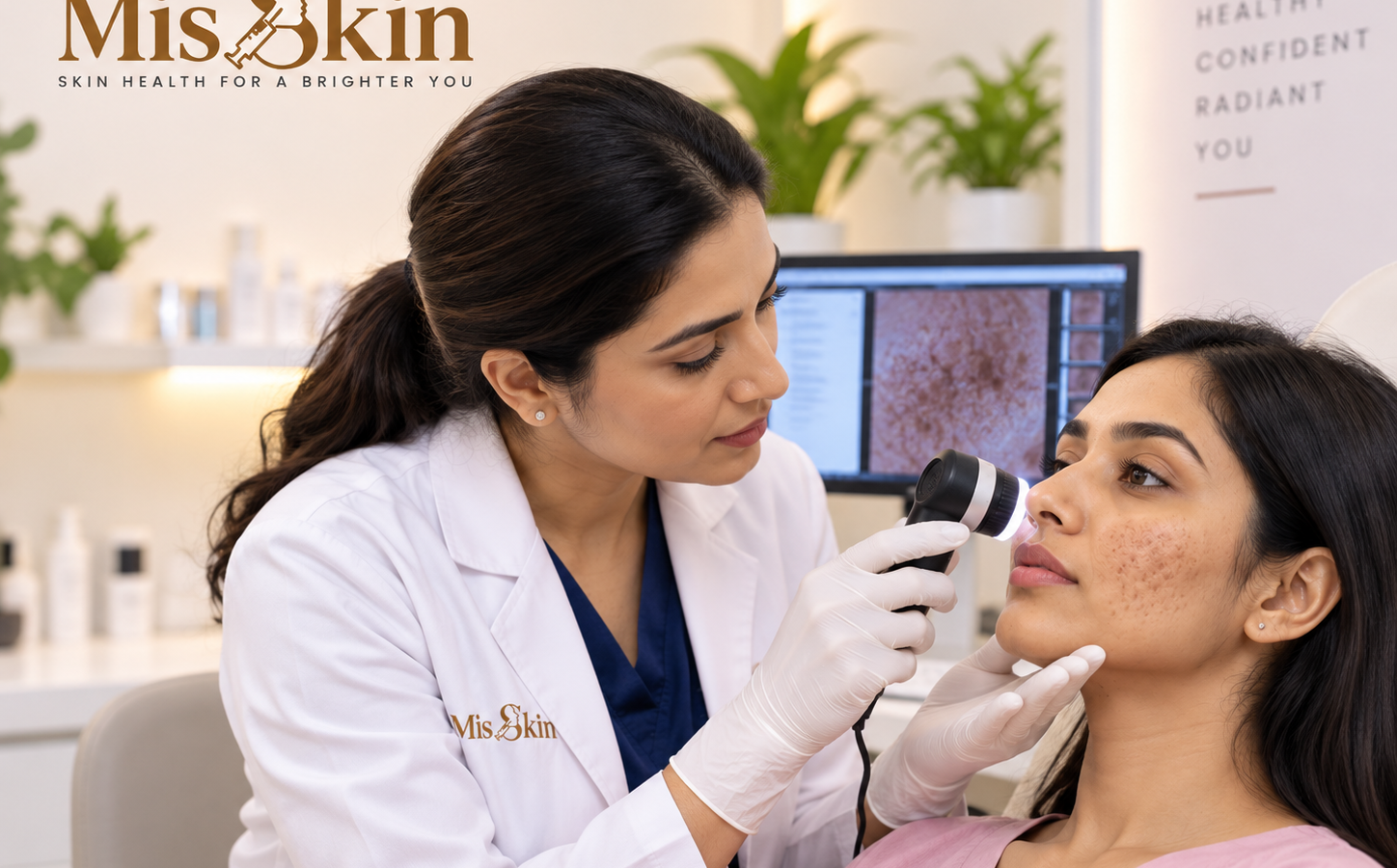
Chemical Peel for Pigmentation: How It Works and Who Is It For?
Chemical Peel for Pigmentation: How It Works and Who Is It For?
Dark spots and uneven skin tone can be surprisingly stubborn.
You may have tried changing skincare products, using sunscreen more regularly or waiting for marks to fade on their own. Sometimes they improve. Sometimes they seem to stay exactly where they are.
That is where professional treatments such as a chemical peel for pigmentation may be considered.
But a chemical peel is not simply a stronger version of a home exfoliating product.
The type of peel, its concentration, your skin condition and the reason behind your pigmentation all matter.
So, can chemical peels actually help pigmentation? And are they suitable for everyone?
Let’s look at it from a practical, dermatologist-led perspective.
What Is a Chemical Peel?
A chemical peel is a professional skin treatment that uses a carefully selected chemical solution to exfoliate the outer layers of the skin.
Depending on the formulation and depth, a peel can help improve concerns such as:
- Uneven skin tone
- Certain types of pigmentation
- Dull-looking skin
- Some acne marks
- Rough skin texture
- Mild superficial skin imperfections
The treatment should be selected according to the condition being treated rather than simply choosing the strongest peel.
You can explore the chemical peel treatments available at Misskin.
How Does a Chemical Peel Help Pigmentation?
Pigmentation develops for different reasons.
When excess melanin accumulates in certain areas, the skin can appear darker or uneven.
A properly selected chemical peel can help by promoting controlled exfoliation of the affected superficial skin layers.
However, pigmentation is not always purely a surface problem.
Depending on the condition, pigment may be influenced by:
- Sun exposure
- Hormonal changes
- Previous acne or inflammation
- Skin irritation
- Certain medications
- Melasma
- Individual skin characteristics
This is why simply exfoliating the skin does not always solve the underlying problem.
Is a Chemical Peel Good for All Types of Pigmentation?
Not necessarily.
This is one of the most important things to understand before booking a pigmentation treatment.
“Pigmentation” is a broad term.
Dark spots left after acne are different from melasma, and melasma can behave differently from pigmentation caused primarily by sun exposure.
A dermatologist needs to assess the pigmentation before deciding whether a chemical peel is appropriate.
Sometimes a peel may be part of the treatment plan. In other cases, a combination of treatments and skincare may be more appropriate.
Chemical Peel for Melasma: Is It Suitable?
Melasma can be particularly challenging because it is often influenced by hormonal factors and sun exposure.
Chemical peels may be considered as part of a broader melasma treatment plan in selected patients.
However, treating melasma is not simply about removing the darker surface layer.
Long-term management often includes:
- Consistent sun protection
- Appropriate skincare
- Medical treatments where indicated
- Professional procedures when suitable
- Regular follow-up
A dermatologist can determine whether a peel is appropriate for your particular skin.
Can Chemical Peels Treat Dark Spots After Acne?
They can be considered for certain superficial marks, particularly when the concern is pigmentation rather than a deeper acne scar.
This distinction matters.
Acne marks and acne scars are not the same thing.
A flat brown or dark mark left after acne may respond differently from an actual depressed or textured acne scar.
For deeper acne scarring, procedures such as microneedling and MNRF or other treatments may be considered depending on the scar type.
If you are unsure whether you have pigmentation or acne scarring, a professional assessment can help clarify the difference.
What Happens During a Chemical Peel Treatment?
The exact process depends on the type of peel.
Generally, the skin is first cleansed and prepared.
The selected solution is then applied carefully for a controlled amount of time.
You may experience:
- Mild tingling
- Warmth
- Stinging
- Tightness
The sensation varies depending on the peel and individual sensitivity.
After the treatment, the skin may look slightly different for a period of time while it goes through the expected recovery process.
Does Your Skin Peel After a Chemical Peel?
Not every chemical peel causes obvious peeling.
This is a common misconception.
Some treatments produce very subtle exfoliation, while others may cause visible flaking or peeling over the following days.
The amount of peeling does not automatically tell you whether a treatment was effective.
A properly selected treatment should focus on the skin condition and desired outcome, not on trying to create the maximum amount of peeling.
How Many Chemical Peel Sessions Are Needed for Pigmentation?
There is no single number that works for everyone.
The number of sessions depends on:
- Type of pigmentation
- Severity
- Skin type
- Response to treatment
- Type of peel
- Skincare routine
- Sun exposure
- Underlying cause
Some patients may notice improvement after an initial treatment, while others may require a planned series of sessions.
Your dermatologist should determine the treatment frequency rather than following a fixed online schedule.
What Should You Do After a Chemical Peel?
Aftercare is an important part of pigmentation treatment.
Your dermatologist may recommend:
1. Sun protection
UV exposure can worsen pigmentation and interfere with treatment progress.
A suitable broad-spectrum sunscreen should be used as directed.
2. Gentle skincare
Avoid unnecessarily harsh products while your skin is recovering.
3. Do not pick peeling skin
If your skin flakes, allow it to shed naturally.
4. Follow your treatment plan
If prescription or medical skincare has been recommended, use it according to your dermatologist’s instructions.
Can Chemical Peels Make Pigmentation Worse?
There is a potential risk of irritation or post-inflammatory hyperpigmentation, particularly when a treatment is poorly selected or the skin is not managed appropriately.
This is one reason professional assessment is important, especially for people who are prone to pigmentation.
More aggressive treatment is not always better.
For pigmentation, the goal is controlled treatment without unnecessary inflammation.
Chemical Peel vs Skincare for Pigmentation
For mild pigmentation, a dermatologist may initially recommend medical skincare and sun protection.
A chemical peel may be considered when a professional treatment could provide additional benefit.
The best approach is not necessarily:
“Peel = better results.”
It is:
Correct diagnosis → appropriate treatment → consistent aftercare → reassessment.
This approach is more useful than choosing a procedure simply because it is popular.
Who May Be a Candidate for a Chemical Peel?
A chemical peel may be considered for adults with certain concerns such as:
- Uneven skin tone
- Selected types of pigmentation
- Some superficial acne marks
- Dull or rough skin texture
But suitability depends on your skin condition.
People with active skin irritation, certain infections, uncontrolled inflammatory conditions or other contraindications may need to postpone treatment or consider another approach.
A dermatologist should assess your skin before treatment.
Why Is Sunscreen Important During Pigmentation Treatment?
Even an effective pigmentation treatment can be undermined by ongoing UV exposure.
Sunlight can stimulate melanin production and contribute to pigmentation returning or becoming darker.
That is why pigmentation management usually involves more than a procedure.
Think of treatment as one part of the plan.
Sun protection is the daily part.
Frequently Asked Questions
Does a chemical peel remove pigmentation permanently?
A chemical peel can improve certain types of pigmentation, but pigmentation can return depending on its underlying cause and factors such as sun exposure or hormonal influences. Long-term management is often important.
Is a chemical peel painful?
Most superficial peels cause sensations such as mild tingling, warmth or stinging rather than significant pain. The experience depends on the type of peel and individual sensitivity.
How long does a chemical peel take?
The treatment itself is generally relatively quick, but the exact duration depends on the peel selected and the treatment plan.
Can I use skincare after a chemical peel?
Your dermatologist will advise you about which products to use and which ingredients to temporarily avoid. Gentle skincare is generally preferred during the recovery period.
Can chemical peels treat melasma?
Chemical peels may be included in the management of melasma for selected patients, but melasma often requires a broader long-term treatment and sun-protection strategy.
Can chemical peels treat acne scars?
Chemical peels can help certain superficial marks and texture concerns, but deeper acne scars often require other treatments. The appropriate treatment depends on the type of scar.
How soon will I see results from a chemical peel?
Some patients notice changes after an initial treatment, while more significant improvement may require a series of treatments. Results vary depending on the condition and individual response.
Is chemical peel treatment safe for every skin type?
Not every peel is appropriate for every person. The formulation, strength, skin type and pigmentation risk should be considered by a qualified professional before treatment.
Final Thoughts
If pigmentation has been bothering you, the most important first step is not choosing the strongest treatment.
It is finding out why the pigmentation is there.
A chemical peel for pigmentation can be useful for selected skin concerns, but the right peel, treatment strength and aftercare matter considerably.
At Misskin, treatment decisions are made based on the individual’s skin rather than using the same procedure for everyone.
Misskin
Dermatologist-led skin and aesthetic care in Bangalore
Locations: Sadashivanagar | RR Nagar | Jayanagar | HSR Layout | HRBR Layout
Call: 9538666485
Email: reachus@misskin.in
Book Your Consultation